
Liquid Level Indicator Buying Guide
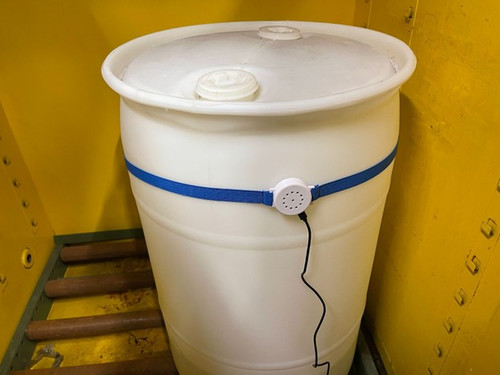 Q: What are TELLI™ and ELLI™?
A: TELLI™ and ELLI™ are CP Lab Safety’s patent-pending Talking Electronic Liquid Level Indicators. They are non-contact devices that strap to the outside of a container and use radio waves to detect the liquid level. When the liquid reaches a preset point, they provide an audible voice alert to warn users of dangerous high or low levels.
Q: What is the difference between TELLI and ELLI?
A: TELLI and ELLI are designed for opposite problems in fluid handling:
- TELLI is a high-level alarm for overfill protection, alerting when a container is almost full to prevent hazardous spills and overflows.
- ELLI is a low-level alarm that alerts when a container is nearly empty, preventing tanks and feed systems from running dry.
Q: How do TELLI and ELLI detect liquid levels without contacting the liquid?
A: TELLI and ELLI use radio waves transmitted through the container wall to sense whether liquid is present behind the device. The units strap to the outside of compatible containers, eliminating direct liquid contact. This non-contact design reduces the risk of cross-contamination, chemical exposure, and damage to the device from harsh reagents.
Q: What are typical applications for TELLI (overflow prevention)?
A: TELLI is used wherever overfills and spills must be prevented, including:
- HPLC and LC-MS waste carboys and bottles
- Chemical waste collection drums and carboys
- General laboratory waste collection vessels where overflow poses a safety or environmental risk
When the liquid level reaches TELLI’s position on the container wall, the voice alarm warns users that the vessel is nearly full and should be emptied.
Q: What are typical applications for ELLI (run-dry prevention)?
A: ELLI is used wherever running a container dry will interrupt a process or damage equipment, including:
- Chemical feed tanks and day tanks
- Process supply reservoirs where prime loss or air lock is a concern
- Systems where dry tanks can cause chemical feed failure or equipment damage
ELLI alerts when the liquid level drops to its location, giving operators time to refill or stop the feed before the system runs dry.
Q: How is TELLI powered?
A: TELLI is powered via an included 8-foot USB cable. It can be plugged into any compatible USB charging brick or powered computer USB port. There are no batteries to replace, which reduces maintenance and eliminates the risk of a dead battery causing a missed alarm.
Q: How is ELLI powered?
A: ELLI uses the same power arrangement as TELLI: an included 8-foot USB cable connected to a USB power brick or powered computer port. This provides continuous power for long-term monitoring without battery replacement.
Q: On what types and sizes of containers can TELLI and ELLI be used?
A: TELLI and ELLI are designed to work on most glass and plastic containers within the following size range:
- Minimum container circumference: 14.75 in (approximately 4.7 in diameter, about 2 L)
- Maximum container circumference (with standard strap): 54.5 in (approximately 17.35 in diameter, about 30–40 gallon)
With extension straps (not included), they can be used on larger containers, including IBC totes. For very large tanks or totes, contact CP Lab Safety for strap options and recommendations.
Q: What are the physical specifications of TELLI and ELLI?
A: TELLI and ELLI share the same physical format:
- Diameter: 2 in
- Across: 2.5 in
- Thickness: 1.7 cm
- Housing material: ABS plastic
- Elastic band stretch range: approximately 27 in relaxed up to 54.5 in stretched circumference
Q: Are TELLI and ELLI safe to use around flammable vapors?
A: TELLI and ELLI are UL tested for non-sparking operation. This makes them suitable for use in many environments where flammable or combustible vapors may be present, when used as part of an appropriate overall safety program. Always follow site-specific safety policies and engineering controls.
Q: How do I set up TELLI to prevent overflows?
A: Basic setup and testing for TELLI are as follows:
- Connect TELLI to power using the USB cable.
- Press the ON/OFF switch once to power on the device.
- Place TELLI against an empty section of the container. If powered and no liquid is detected, the LED will show green.
- Slide TELLI slowly downward toward the liquid level. When TELLI detects liquid, the LED will flash red and the voice alert will activate.
- If detection is inconsistent, press the ON/OFF switch six times to reset and recalibrate, then retest.
- Once a reliable detection location is found, secure TELLI to the container at the desired high-level position using the adjustable strap. For slow processes (such as HPLC waste), you can place TELLI higher on the container; for faster filling operations, place it lower to allow more reaction time.
When the liquid reaches TELLI’s position, the audible alert will sound, prompting the user to empty or swap the container.
Q: How do I set up ELLI to prevent tanks from running dry?
A: Basic setup and testing for ELLI are as follows:
- Connect ELLI to power using the USB cable.
- Press the ON/OFF switch once to power on the device.
- Place ELLI against a full area of the container. If powered and liquid is detected, the LED will show green.
- Slide ELLI upward toward the headspace (empty region) in the container. When ELLI no longer detects liquid behind it, the LED will flash red and the voice alert will activate.
- If detection is inconsistent, press the ON/OFF switch six times to reset and recalibrate, then retest.
- Once a reliable detection location is found, secure ELLI to the container near the bottom or low-level setpoint using the adjustable strap. For rapid feed rates, place ELLI slightly higher to allow more time to respond before the vessel runs dry.
When the liquid level drops to ELLI’s position, the audible alert warns operators to refill or stop the feed before the system loses prime or air-locks.
Q: How do TELLI and ELLI behave during and after an alarm?
A: When the monitored level crosses the TELLI or ELLI detection point:
- The LED changes from green to flashing red.
- The device announces an audible voice alert to notify users of the high-level (TELLI) or low-level (ELLI) condition.
TELLI will stop alarming when it no longer detects liquid (for example, if it is moved above the liquid line or the container is emptied). ELLI will stop alarming when it no longer detects empty space at its location (for example, when the container is refilled above its position). In either case, you can also silence the alarm by unplugging the USB power.
Q: How do I reset or recalibrate TELLI or ELLI?
A: If you experience inconsistent detection, follow these steps:
- Ensure the device is powered (LED is on).
- Press the ON/OFF switch six times in succession.
- This action resets and recalibrates the unit. After resetting, retest the device on the container and locate a position that consistently detects the desired liquid or empty level.
Some opaque or irregular plastic containers may require testing in multiple locations to find an area where wall thickness and composition allow reliable radio wave transmission.
Q: Can TELLI and ELLI be used on containers larger than 40 gallons or on IBC totes?
A: Yes. With the standard strap, TELLI and ELLI fit most containers from approximately 2 liters up to 30–40 gallons. For larger vessels such as IBC totes, additional or custom extension straps can be used. Contact CP Lab Safety for recommended strap solutions and best practices for large container applications.
Q: What are the main benefits of using TELLI and ELLI in the lab or plant?
A: Key benefits include:
- Non-contact monitoring to avoid cross-contamination and chemical damage to sensors
- Prevention of overflows, spills, and waste container incidents (TELLI)
- Prevention of dry tanks, feed starvation, prime loss, and air lock (ELLI)
- Continuous operation with USB power, eliminating battery replacement and battery failure risk
- Compatibility with most glass and plastic containers in typical lab and process environments
- UL tested for non-sparking performance in appropriate environments