
Solid Waste Container Buying Guide
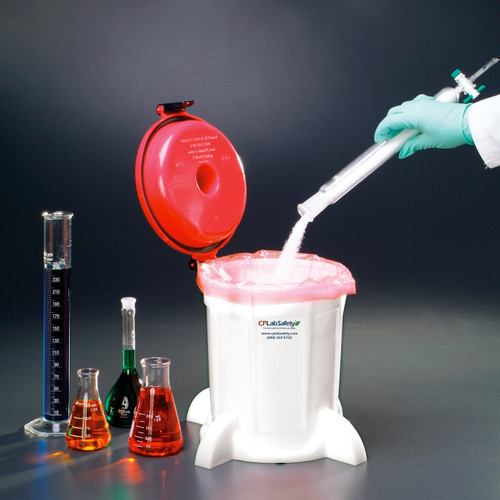
Bench Top Solid Waste Container (SWC-002) & Bench Top Biohazard Waste Container (SWC-002BIO) – Q & A
Q: What is the Bench Top Solid Waste Container used for?
A: The Bench Top Solid Waste Container (SWC-002) is designed for the safe, compliant segregation of chemically contaminated solid waste at the point of generation. It allows researchers to discard contaminated wipes, gloves, filter papers, pipets, and other disposables without walking across the lab, reducing the risk of cross-contamination and solvent vapor exposure.
Q: What is the purpose of the Biohazard version (SWC-002BIO)?
A: The Bench Top Biohazard Waste Container (SWC-002BIO) is the same design and construction as the standard model but includes a neon red-orange universal Biohazard label. This label clearly identifies the contents as biohazardous, supporting compliance with laboratory safety and biohazard handling requirements. It is intended for collection of contaminated gloves, pipets, wipes, and other items exposed to bloodborne pathogens or biological materials.
Q: Is it legal to place contaminated waste into regular trash?
A: No. It is against the law to add chemically contaminated solid waste to the general trash in the laboratory, and it is also against the law to add biohazardous waste to regular trash. The standard solid waste container and the biohazard-labeled model help ensure proper segregation and compliant handling of hazardous and biohazardous solid waste.
Q: How does the latching lid improve safety?
A: The latching, gasketed lid minimizes exposure by containing vapors and particulates inside the container. For chemically contaminated waste, it reduces solvent emissions into the workspace. For biohazardous waste, it helps limit the release of potentially infectious aerosols back into the lab environment. The latching lid also helps prevent accidental spills and cross-contamination.
Q: What materials are the containers made from?
A: Both the standard Bench Top Solid Waste Container and the Bench Top Biohazard Waste Container are made from chemically resistant HDPE. The container features a detachable base and a lid with gasket, providing durability, chemical resistance, and easy cleaning and liner replacement.
Q: What is the capacity of the container?
A: The approximate capacity of the container is 1.5 gallons (5 liters). This volume is suitable for bench-level or fume hood use without occupying excessive space while still accommodating a practical amount of contaminated solid waste.
Q: What are the dimensions of the Bench Top Solid Waste Container (SWC-002)?
A: Product dimensions for SWC-002 are:
- Height (lid closed): 11 in
- Height (lid open): 21 in
- Footprint (with base): 13 × 13 in
- Footprint (without base): 7 × 7 in
- Capacity (approx.): 1.5 gallons / 5 liters
Q: What types of waste are appropriate for the standard solid waste model (SWC-002)?
A: The SWC-002 model is intended for chemically contaminated solid waste, including:
- Solvent-soaked wipes and Kim-wipes
- Contaminated gloves and wiping rags
- Filter papers and wet silica gel
- Pipets, pipet bulbs, and other disposable labware
- Radioisotope and beta-emitter contaminated solids, as permitted by institutional policy
Using a dedicated solid waste container helps keep RCRA hazardous waste segregated from normal trash and reduces the chance of contaminating other areas of the lab.
Q: What types of waste are appropriate for the Biohazard model (SWC-002BIO)?
A: The SWC-002BIO model is intended for biohazardous solid waste, including:
- Gloves and wipes contaminated with bloodborne pathogens or biological agents
- Cell culture disposables and biologically contaminated pipets
- Other solid disposables that must be clearly identified as biohazardous
The neon red-orange biohazard label provides clear visual indication of the nature of the contents and supports proper segregation and disposal practices.
Q: Why use a benchtop waste container instead of a larger room-wide bin?
A: A benchtop container allows users to discard contaminated solids directly at the point of generation. This reduces the need to carry hazardous or biohazardous items across the lab, lowering the risk of spills, drips, and cross-contamination. It also minimizes solvent vapor and contaminant release into the general lab environment and improves workflow efficiency.
Q: How does the detachable base and gasketed lid help in containment?
A: The detachable base makes it easy to remove and replace liner bags without disturbing the container body. The gasketed lid helps form a more effective seal, improving containment of vapors and particulates from contaminated solid waste. Together, these features make the container an effective system for both chemical and biohazardous solid waste containment.
Q: Does the container include liner bags?
A: Each Bench Top Solid Waste Container is supplied with a single sample liner bag. Additional poly liner bags are available separately in red, yellow, or with biohazard labeling, in packs of 100 or 250.
Q: What are the specifications of the poly liner bags?
A: Poly liner bag specifications are:
- Length: 18 in (45.72 cm)
- Width: 14 in (35.56 cm)
- Thickness: 0.05 mm (50 microns)
- Weight: 5.4 lbs per 100 bags; 8.5 lbs per 250 bags
Q: Are both models suitable for use in fume hoods or on crowded benches?
A: Yes. Both the standard and biohazard models have a small footprint and are designed to sit conveniently in the corner of a fume hood or on a laboratory bench. Their compact design helps conserve workspace while still providing adequate capacity for routine solid waste collection.
Q: How do these containers help with RCRA and biohazard compliance?
A: The Bench Top Solid Waste Container supports RCRA compliance by keeping chemically contaminated solid waste segregated from general trash. The Bench Top Biohazard Waste Container adds clear biohazard labeling, ensuring that biohazardous solid wastes are properly identified and not mixed with non-hazardous waste streams. Using the appropriate model helps laboratories maintain regulatory compliance and improves overall safety practices.