
Chemical Charts
Chemical Resistance Information for Plastic Bottles, Containers & Safety Cans
|
What type of plastic offers the best resistance to various chemicals?
|
|
| Chemical Resistance Reference Charts for Plastic Containers: We have several chemical compatibility reference charts to help you determine the appropriate resin for your specific chemical needs. | |
Chemical Charts by Material:
|
General Chemical Compatibility Overview Charts:
|
© CP Lab Safety. All Rights Reserved.
Please Note: these charts are for general reference only. We have aggregated this data from dozens of sources and any single piece of data cannot be guaranteed. Additionally, many factors affect the chemical resistance of a given plastic product including the concentration/purity of the chemical, working temperature, wall thickness and condition of the container, etc. It is your responsibility to test a container and chemical together ensure compatibility under your unique circumstances.
Overview of Chemical Resistance of Resins to Chemicals at 20°C:
| 30 Days of constant exposure causes no damage. Plastic may tolerate for years. | 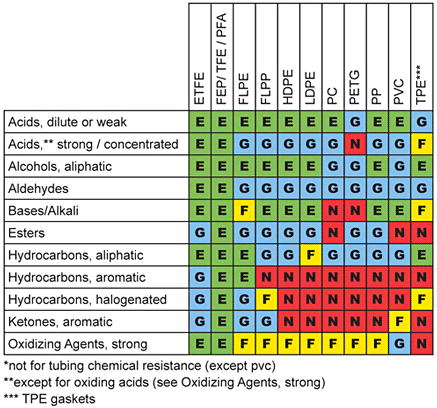 |
|
| G | Little or no damage after 30 days of constant exposure to the reagent. | |
| Some effect after 7 days to the reagent. The effect may be crazing, cracking, loss of strength or discoloration. | ||
| Not recommended. Immediate damage may occur. Depending on the plastic, the effect may be severe crazing, cracking, loss of strength, discoloration deformation, dissolution or permeation loss. |
 Polyethylene (LDPE and HDPE) Resistance Chart by Chemical
The chemical compatibility of LDPE and HDPE on this chart is tested at 20°C: and 50°C: for 7 days and 30 days (if applicable) with constant exposure.
| LDPE & HDPE resistance listed by chemical | |
| 1.4-dioxane | LDPE / HDPE at 20°C: little or no damage after 30 days. LDPE at 50°C: shows some effect after 7 days. |
| Acetaldehyde | LDPE / HDPE at 20°C: little or no damage after 30 days. HDPE at 50°C: shows some effect after 7 days. LDPE at 50°C: immediate damage may occur. |
| Acetic Acid 5 % | LDPE / HDPE at 20°C-50°C: little or no damage after 30 days. |
| Acetic Acid, glacial 50% | LDPE / HDPE at 20°C: little or no damage after 30 days. LDPE at 50 °C: immediate damage may occur. |
| Acetone | LDPE / HDPE at 20°C-50°C: damage may occur. Not recommended for continuous use. |
| Allyl Alcohol | LDPE / HDPE at 20°C-50°C: little or no damage after 30 days. |
| Aluminum salts | LDPE / HDPE at 20°C-50°C: little or no damage after 30 days. |
| Amino acids | LDPE / HDPE at 20°C-50°C: little or no damage after 30 days. |
| Ammonia | LDPE / HDPE at 20°C-50°C: little or no damage after 30 days. |
| Ammonium carbonate saturated | LDPE / HDPE at 20°C-50°C: little or no damage after 30 days. |
| Ammonium phosphate | LDPE / HDPE at 20°C-50°C: little or no damage after 30 days. |
| Ammonium sulphate | LDPE / HDPE at 20°C-50°C: little or no damage after 30 days. |
| Amyl chloride | HDPE at 20°C: shows some effect after 7 days. HDPE at 50°C & LDPE at 20°C-50°C: immediate damage may occur. Not recommended for continuous use. |
| Aniline | LDPE / HDPE at 20°C: little or no damage after 30 days. HDPE at 50°C: shows some effect after 7 days. |
| Benzene | LDPE / HDPE at 20°C-50°C: damage may occur. Not recommended for continuous use. |
| Benzyl alcohol | LDPE / HDPE at 50°C: immediate damage may occur. HDPE at 20°C: shows some effect after 7 days. |
| Boric acid | LDPE / HDPE at 20°C-50°C: little or no damage after 30 days. |
| Bromine | LDPE / HDPE at 50°C: immediate damage may occur. HDPE at 20°C: shows some effect after 7 days. |
| Butyric acid | LDPE / HDPE at 50°C: immediate damage may occur. HDPE at 20°C: shows some effect after 7 days. |
| Calcium chloride | LDPE / HDPE at 20°C-50°C: little or no damage after 30 days. |
| Calcium hydroxide saturated | LDPE / HDPE at 20°C-50°C: little or no damage after 30 days. |
| Carbon tetrachloride | HDPE at 20°C: shows little or no damage after 30 days. LDPE at 20°C & HDPE at 50°C: show some effect after 7 days. LDPE at 50°C: not recommended. |
| Chlorine 10% in water | LDPE / HDPE at 20°C: shows little or no damage after 30 days. LDPE at 50°C: shows damage and is not recommended. |
| Chlorobenzene | Immediate damage may occur. Not recommended for continuous use. |
| Chloroform | LDPE / HDPE at 20°C: show some effect after 7 days. LDPE / HDPE at 50°C: immediate damage may occur. Not recommended for continuous use. |
| Chromic acid 10% | LDPE / HDPE at 20°C-50°C: little or no damage after 30 days. |
| Chromic acid 50% | LDPE / HDPE at 20°C-50°C: little or no damage after 30 days. |
| Citric acid 10% | LDPE / HDPE at 20°C-50°C: little or no damage after 30 days. |
| Cresol | HDPE at 20°C: shows some effect after 7 days. LDPE at 20°C-50°C & HDPE at 50°C: show immediate damage. Not recommended for continuous use. |
| Cyclohexane | LDPE / HDPE at 50°C: immediate damage may occur. LDPE / HDPE at 20°C: show some effect after 7 days. |
| Diethyl ketone | LDPE / HDPE at 20°C-50°C: damage may occur. Not recommended for continuous use. |
| Dimethylsulfoxide | LDPE / HDPE at 20°C-50°C: little or no damage after 30 days. |
| Ethanol 95% | LDPE / HDPE at 20°C-50°C: little or no damage after 30 days. |
| Ethyl acetate | LDPE / HDPE at 20°C-50°C: little or no damage after 30 days. |
| Ethyl benzene | HDPE at 20°C: shows some effect after 7 days. LDPE at 20°C-50°C & HDPE at 50°C: show immediate damage. Not recommended for continuous use. |
| Ethylene glycol | LDPE / HDPE at 20°C-50°C: little or no damage after 30 days. |
| Ethylene oxide | HDPE at 20°C: shows little or no damage after 30 days. LDPE at 20°C: and LDPE/ HDPE at 50°C: show some effect after 7 days. |
| Ferric chloride | LDPE / HDPE at 20°C-50°C: little or no damage after 30 days. |
| Fluoride | LDPE / HDPE at 20°C-50°C: little or no damage after 30 days. |
| Fluorine | HDPE at 20°C: shows little or no damage after 30 days. LDPE at 20°C: shows some effect after 7 days. Not recommended at 50°C. |
| Formaldehyde 10% | LDPE / HDPE at 20°C-50°C: little or no damage after 30 days. |
| Formaldehyde 40% | LDPE / HDPE at 20°C-50°C: little or no damage after 30 days. |
| Glycerol | LDPE / HDPE at 20°C-50°C: little or no damage after 30 days. |
| Hexane | HDPE at 20°C: shows little or no damage after 30 days continuous use. HDPE at 50 °C: shows some effect after 7 days. LDPE not recommended at any temperature. |
| Hydrochloric acid 20% | LDPE / HDPE at 20°C-50°C: little or no damage after 30 days. |
| Hydrochloric acid 35% | LDPE / HDPE at 20°C-50°C: little or no damage after 30 days. |
| Hydrochloric acid 5% | LDPE / HDPE at 20°C-50°C: little or no damage after 30 days. |
| Hydrocyanic acid | LDPE / HDPE at 20°C-50°C: little or no damage after 30 days. |
| Hydrofluoric acid | LDPE / HDPE at 20°C-50°C: little or no damage after 30 days. |
| Hydrofluoric acid 4% | LDPE / HDPE at 20°C-50°C: little or no damage after 30 days. |
| Hydrofluoric acid 48% | LDPE / HDPE at 20°C-50°C: little or no damage after 30 days. |
| Hydrogen peroxide 3% | LDPE / HDPE at 20°C-50°C: little or no damage after 30 days. |
| Hydrogen peroxide 30% | LDPE / HDPE at 20°C-50°C: little or no damage after 30 days. |
| Isobutyl alcohol | LDPE / HDPE at 20°C-50°C: little or no damage after 30 days. |
| Isopropyl alcohol | LDPE / HDPE at 20°C-50°C: little or no damage after 30 days. |
| Kerosene | LDPE / HDPE at 20°C: show some effect after 7 days. LDPE / HDPE not recommended at 50°C, as immediate damage may occur. |
| Lactic Acid 10 % | LDPE / HDPE at 20°C-50°C: little or no damage after 30 days. |
| Lactic Acid 90 % | LDPE / HDPE at 20°C-50°C: little or no damage after 30 days. |
| Lead acetate | LDPE / HDPE at 20°C-50°C: little or no damage after 30 days. |
| Methanol | LDPE / HDPE at 20°C-50°C: little or no damage after 30 days. |
| Methyl ethyl ketone | Immediate damage may occur. Not recommended for continuous use. |
| Methyl propyl ketone | HDPE at 20°C: shows some effect after 7 days. LDPE at 20°C-50°C & HDPE at 50°C: Immediate damage may occur. Not recommended for continuous use. |
| Methylene chloride | HDPE at 20°C: shows some effect after 7 days. LDPE at 20°C-50°C & HDPE at 50°C: Immediate damage may occur. Not recommended for continuous use. |
| Mineral oil | LDPE / HDPE at 20°C: little or no damage after 30 days. LDPE at 50°C: may show immediate damage and is not recommended. |
| n-amyl acetate | LDPE / HDPE at 20°C: little or no damage after 30 days. LDPE at 50°C: shows some effect after 7 days or constant exposure. |
| n-butyl alcohol | LDPE / HDPE at 20°C-50°C: little or no damage after 30 days. |
| Nitric acid 50 % | LDPE at 20°C: shows little or damage after 30 days. HDPE at 20°C & LDPE at 50°C: show effect after 7 days. HDPE at 50°C: shows immediate damage and is not recommended. |
| Nitric acid 70 % | LDPE / HDPE at 20°C: show some effect after 7 days. LDPE / HDPE at 50°C: show immediate damage. Not recommended. |
| n-octane | LDPE / HDPE at 20°C-50°C: little or no damage after 30 days. |
| Oleic acid | HDPE at 20°C-50°C: little or no damage after 30 days. LDPE at 20°C-50°C: shows immediate damage and is not recommended. |
| Oxalic acid | LDPE at 20°C: shows some effect after 7 days. HDPE at 20°C and LDPE / HDPE at 50°C: shows little/ no damage after 30 days. |
| Ozone | LDPE / HDPE at 20°C: little or no damage after 30 days. LDPE / HDPE at 50°C: show immediate damage. Not recommended. |
| Perchloric acid | LDPE / HDPE at 20°C: little or no damage after 30 days. LDPE / HDPE at 50°C: show immediate damage. Not recommended. |
| Perchloric ethylene | LDPE / HDPE at 20°C-50°C: show immediate damage. Not recommended. |
| Phenol | LDPE / HDPE at 20°C-50°C: show immediate damage. Not recommended. |
| Phosphoric acid 10% | LDPE / HDPE at 20°C-50°C: little or no damage after 30 days. |
| Phosphoric acid 85% | LDPE / HDPE at 20°C: little or no damage after 30 days. LDPE at 50°C: shows immediate damage and is not recommended. |
| Phosphorous trichloride | LDPE / HDPE at 20°C: little or no damage after 30 days. LDPE at 50°C: has no data available. HDPE at 50°C: shows some effect after 7 days. |
| Potassium carbonate | LDPE / HDPE at 20°C-50°C: little or no damage after 30 days. |
| Potassium hydroxide 5 % | LDPE / HDPE at 20°C-50°C: little or no damage after 30 days. |
| Potassium hydroxide concentrated | LDPE / HDPE at 20°C-50°C: little or no damage after 30 days. |
| Potassium permanganate | LDPE / HDPE at 20°C-50°C: little or no damage after 30 days. |
| Propylene glycol | LDPE / HDPE at 20°C-50°C: little or no damage after 30 days. |
| Pyridine | Immediate damage may occur. Not recommended for continuous use. |
| Salicylic acid, saturated | LDPE / HDPE at 20°C-50°C: little or no damage after 30 days. |
| Silver acetate | LDPE / HDPE at 20°C-50°C: little or no damage after 30 days. |
| Silver nitrate | LDPE / HDPE at 20°C-50°C: little or no damage after 30 days. |
| Sodium carbonate | LDPE / HDPE at 20°C-50°C: little or no damage after 30 days. |
| Sodium chloride, saturated | LDPE / HDPE at 20°C-50°C: little or no damage after 30 days. |
| Sodium dichromate | LDPE / HDPE at 20°C-50°C: little or no damage after 30 days. |
| Sodium hydroxide 1% | LDPE at 20°C-50°C: shows little or no damage after 30 days. HDPE at 20°C-50°C: shows some effect after 7 days. |
| Sodium hydroxide 50% | LDPE / HDPE at 20°C-50°C: little or no damage after 30 days. |
| Sodium hypochlorite 15% | HDPE at 20°C-50°C: little or no damage after 30 days. LDPE at 20°C: is suitable but at 50°C: shows some effect after 7 days. |
| Sodium nitrate | LDPE / HDPE at 20°C-50°C: little or no damage after 30 days. |
| Sodium sulphate | LDPE / HDPE at 20°C-50°C: little or no damage after 30 days. |
| Sucrose | LDPE / HDPE at 20°C-50°C: little or no damage after 30 days. |
| Sulfuric acid 20% | LDPE / HDPE at 20°C-50°C: little or no damage after 30 days. |
| Sulfuric acid 6% | LDPE / HDPE at 20°C-50°C: little or no damage after 30 days. |
| Sulfuric acid 60% | LDPE / HDPE at 20°C-50°C: little or no damage after 30 days. |
| Sulfuric acid 98% | LDPE at 20°C-50°C: shows little or no damage after 30 days. HDPE at 20°C: shows effect after 7 days. Not recommended for use at 50°C. |
| Tannic acid | LDPE / HDPE at 20°C-50°C: little or no damage after 30 days. |
| Tetrahydrofuran | LDPE / HDPE at 20°C: show some effect after 7 day of constant exposure. LDPE / HDPE at 50°C: show immediate damage. Not recommended. |
| Toluene | LDPE at 20°C: show some effect after 7 day of constant exposure. HDPE at 20°C-50°C & LDPE at 50°C: show immediate damage. Not recommended. |
| Trichloracetic acid | LDPE / HDPE at 20°C: show some effect after 7 day of constant exposure. LDPE / HDPE at 50°C: show immediate damage. Not recommended. |
| Trichlorethane | Immediate damage may occur. Not recommended for continuous use. |
| Turpentine oil | LDPE / HDPE at 20°C: show some effect after 7 days. LDPE / HDPE at 50°C: show immediate damage. Not recommended. |
| Urea | LDPE / HDPE at 20°C-50°C: little or no damage after 30 days. |
| Xylene | HDPE at 20°C: shows some effect after 7 day of constant exposure. LDPE at 20-50°C and HDPE at 50°C: show immediate damage. Not recommended. |
| Zinc chloride | LDPE / HDPE at 20°C-50°C: little or no damage after 30 days. |