
What Defines a Closed Waste Container? Open vs Closed Lab Waste Systems
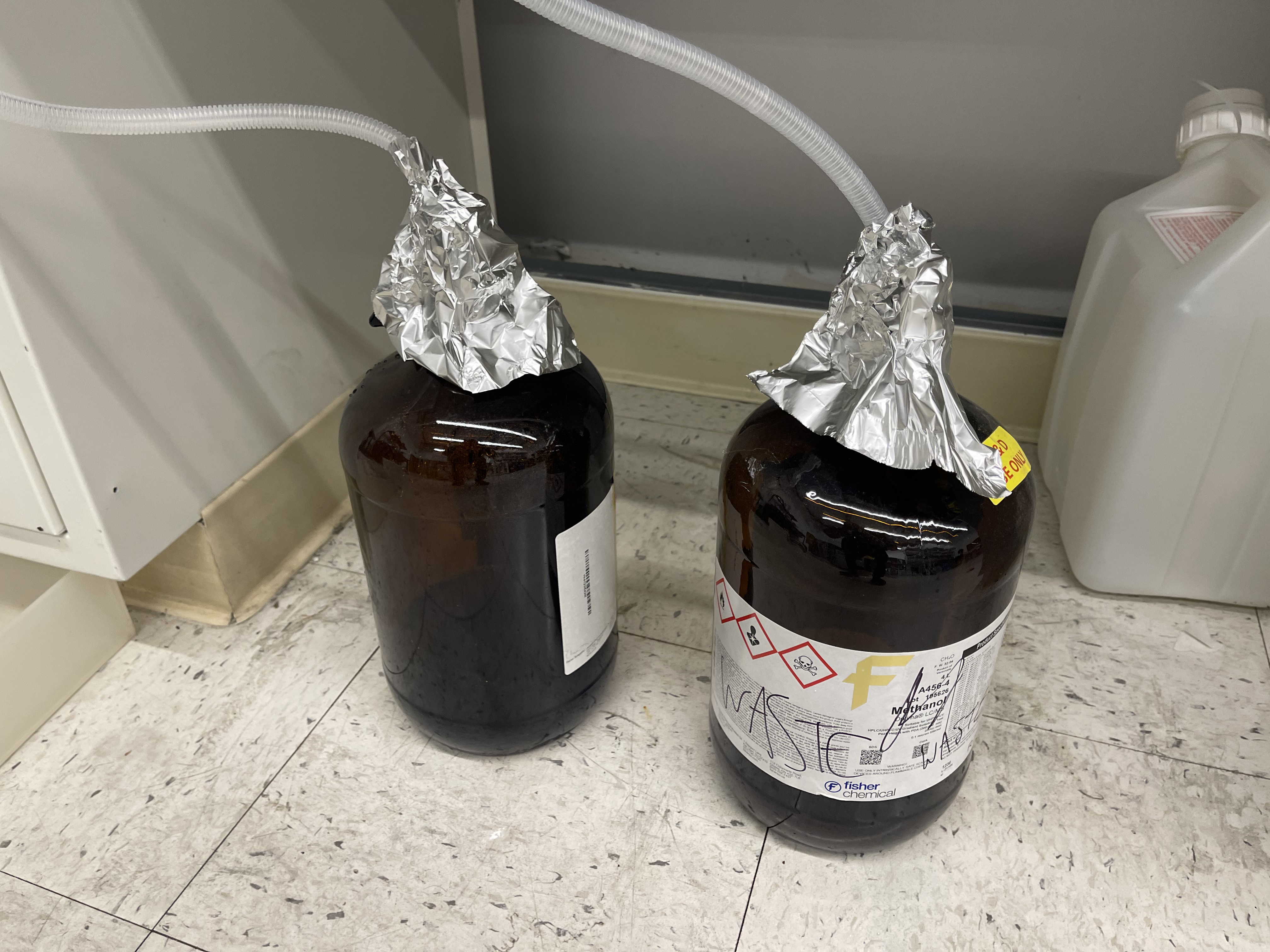
The distinction between open and closed waste containers in the laboratory is not just a design preference; it directly impacts exposure levels, fire risk, and inspection outcomes.
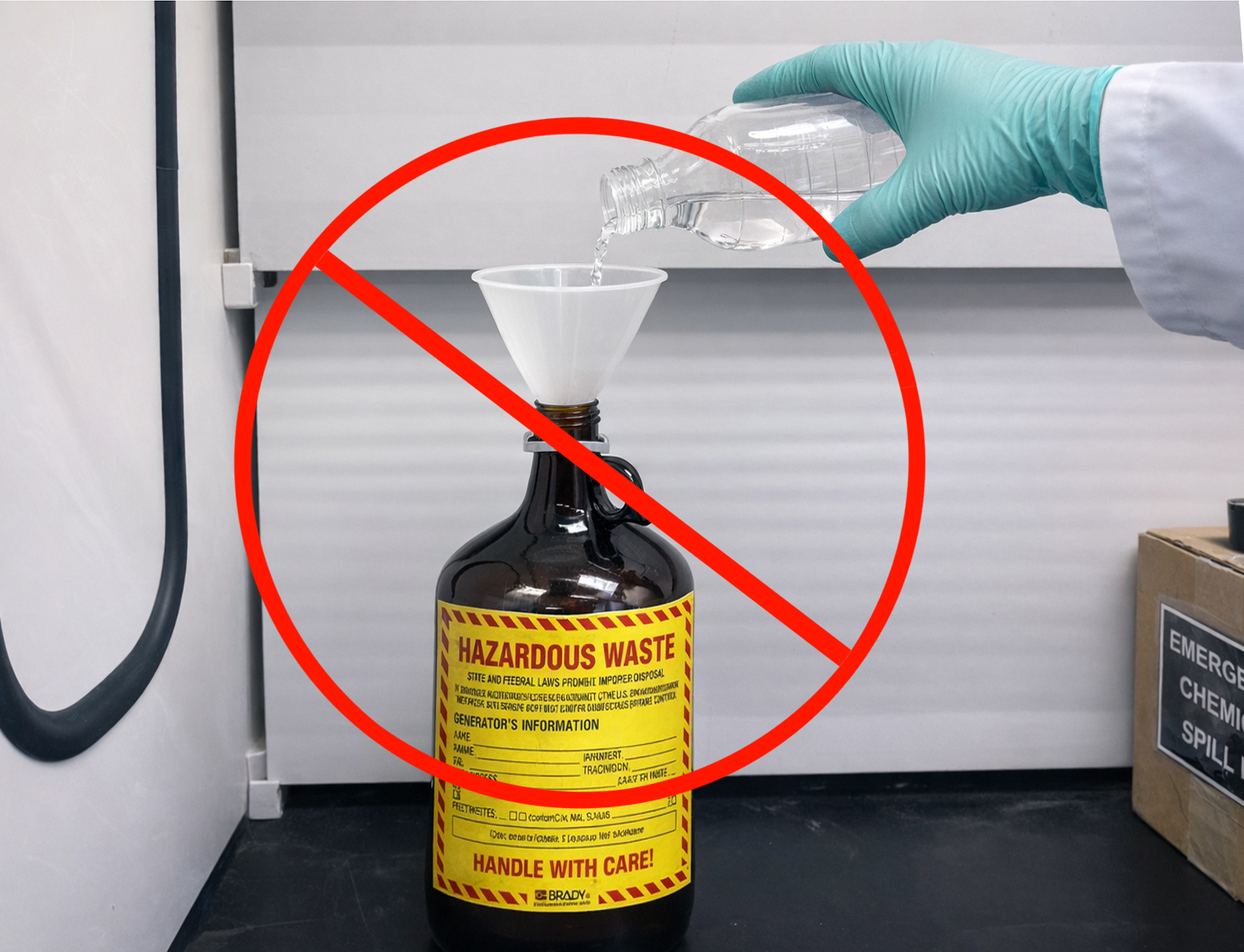
Open waste containers take many forms: uncapped bottles, containers loosely covered with parafilm, or bottles fitted with open funnels. In each case, inadequate sealing allows continuous volatilization of solvents and reagents into the surrounding air. Even chemicals with relatively low vapor pressure can accumulate over time, particularly in confined or poorly ventilated environments.
An open waste container placed in a fume hood may help protect nearby personnel from direct breathing-zone exposure, but it does not contain the vapors themselves. Those emissions are simply transferred into the exhaust system, where they may increase overall solvent emissions and create downstream environmental burdens.
In contrast, closed systems are engineered specifically to prevent vapor from escaping while allowing waste to be collected safely and efficiently.
Vapor Exposure Pathways and Evaporation Control
From an exposure and risk standpoint, the difference between open and closed systems is substantial. Open systems act as persistent emission sources, contributing to:
- Chronic low-level inhalation exposure for nearby personnel
- Elevated background VOC concentrations
- Increased odor complaints and worker discomfort
- Fire and explosion risk from accumulation of flammable vapors
Containment is not solely about preventing spills—it is about controlling phase transfer. Many laboratory solvents such as acetone, methanol, and acetonitrile readily transition to vapor at room temperature. Without proper containment, every waste container can become a passive emission source.
Effective vapor containment relies on three core principles:
- Physical sealing at all connection points (lid, tubing, fittings)
- Controlled ingress of liquid waste without exposing the internal vapor space
- Managed egress of gases through filtered or pressure-balancing mechanisms
Why Open Containers Violate EPA/OSHA Expectations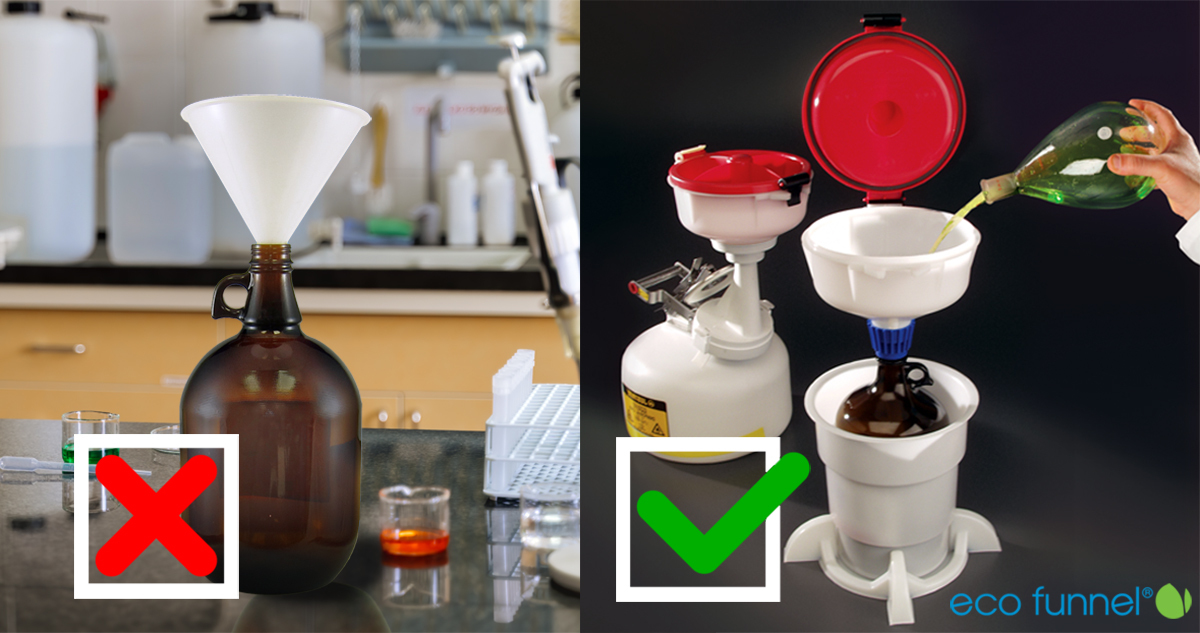
Although specific enforcement language varies by jurisdiction, open waste containers often conflict with common EPA, OSHA, fire code, and hazardous waste management expectations requiring containers to remain closed except when actively adding or removing waste.
Common concerns with open containers include:
- Continuous vapor release from hazardous waste
- Increased fire risk from flammable solvent vapors
- Higher chance of spills or tip-overs
- Poor labeling and cluttered fume hoods
- Lack of clear secondary containment
Many inspections focus less on theory and more on practical control measures. A container that is visibly open, loosely covered, or fitted with an unsecured funnel will invite scrutiny.
Designing the Right Waste Container Setup
The correct setup depends on how waste is generated.
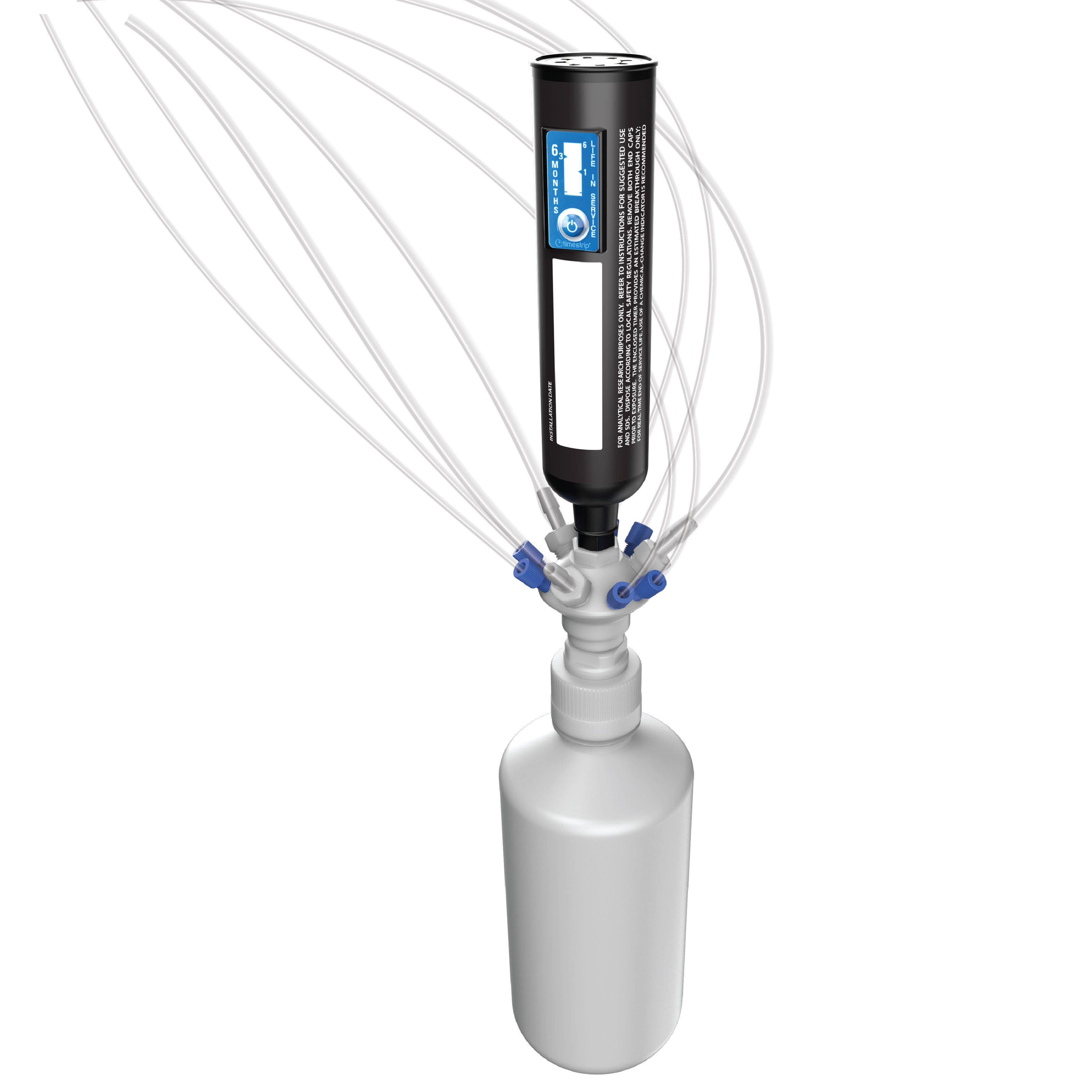
For Automated Instrument Waste, use a fully closed pathway:
- Threaded port cap matched to the bottle on both the inlet and waste collection side
- Solvent-resistant tubing from instrument oulet to waste container with secure, air-right fittings
- Filtered venting path
- Secondary containment tray
For Manual Bench Waste
Where personnel routinely add small waste volumes throughout the day, systems must balance containment with usability. If disposal is cumbersome, users may bypass procedures and leave containers open.
Best practices include:
- Easy-open but self-closing lids
- Tight bottle threading
- Splash control
- Clear labeling
- Proper bottle sizing to avoid overfill conditions
Closing HPLC & LC-MS Systems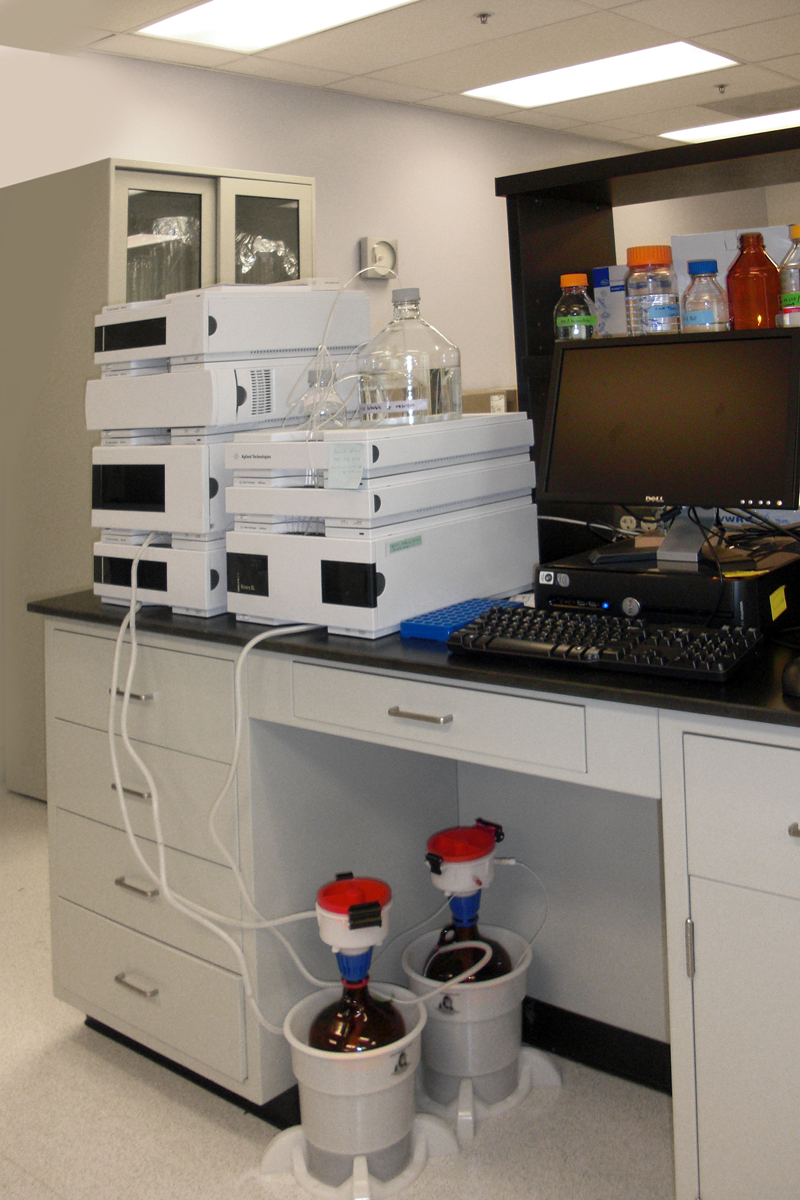
Many HPLC and LC-MS systems run continuously and generate solvent waste streams that are ideal candidates for true closed-loop collection.
A common best-practice setup includes:
- Solvent delivery cap feeding fresh mobile phase through sealed tubing into the instrument
- Waste tubing routed from instrument outlet into a sealed collection cap
- Controlled venting through filter media or engineered vent valves
- Tight fittings that prevent leaks or vapor escape
In these systems, the waste bottle, tubing, and cap function as one sealed pathway. This minimizes analyst exposure and keeps instrument areas cleaner and more professional.
Common Failure Points in Liquid Waste Disposal
Even well-intended systems can fail if details are overlooked. Frequent problems include:
- Open funnels left permanently in waste bottles
- Loose caps or mismatched threads
- Tubing inserted through improvised holes in caps
- Overfilled containers submerging vent paths
- Cracked secondary containers
- Chemical incompatibility between solvent and tubing/gaskets
- Bottles changed without reconnecting lines securely
- Operators removing lids for convenience and not reclosing them
A system is only as effective as its weakest seal.
ECO Funnel® for Manual Waste Collection
Aside from automated processes, many labs also have personnel routinely generating small amounts of liquid waste. In these cases, a completely closed cap-and-tubing system may be impractical because repeatedly uncapping, placing a funnel, pouring waste, and recapping a container is laborious enough to encourage shortcuts.
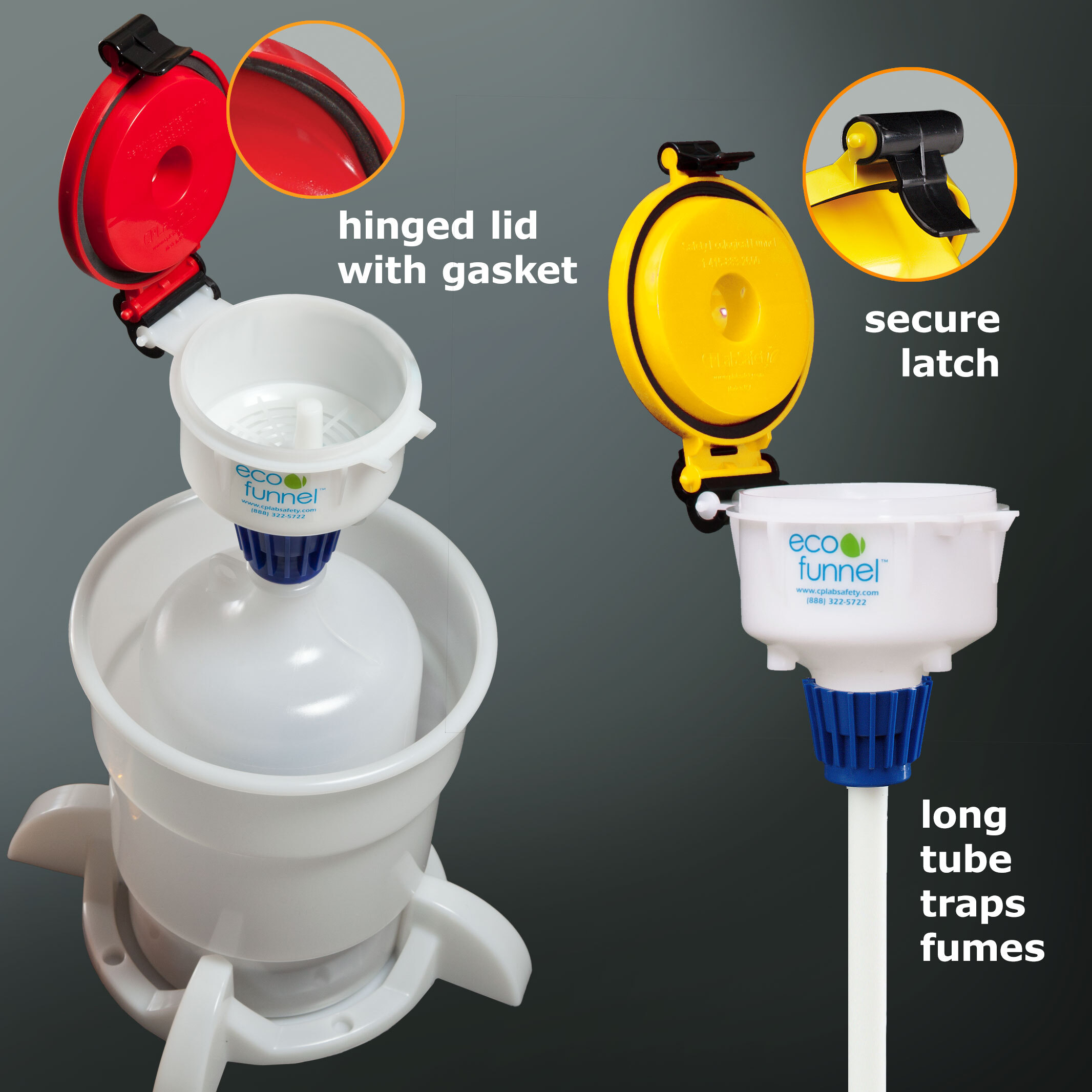
For these situations, ECO Funnel® is an effective containment solution. It performs the practical function of a closed system—reducing volatile emissions—while enabling high adoption through ease of use.
An ECO Funnel forms an airtight seal on compatible waste containers. Its long tube extends below the liquid level, reducing exposed vapor surface area and helping trap the majority of fumes inside the bottle—even when the lid is briefly open during waste addition.
Through this design, ECO Funnel helps reduce exposure and minimize fire risk while allowing users to dispose of waste quickly and consistently.
Many regulators have accepted that a closed and latched ECO Funnel, when properly used between waste additions, satisfies the practical intent of keeping hazardous waste containers closed.
Steve Carroll, retired San Diego Fire Marshal and Biotech Inspector, described the ECO Funnel as the:
"ideal containment system that eliminates the danger of ignited vapors and spills from open chemical waste containers."
Summary: What Defines a Closed System
A closed system is more than a lid. It is a waste management pathway engineered to control vapors, spills, and operator behavior.
A properly closed system should:
- Prevent unnecessary vapor release
- Minimize fire and exposure risk
- Stay closed except during active use
- Be practical enough that staff actually use it correctly
- Maintain secure seals across caps, tubing, and fittings
The best waste system is the one that combines regulatory intent, real-world usability, and consistent daily compliance.
Explore our ECO Funnels and Port Cap Closed Systems