
Blog Posts
Understanding Catalysts
A catalyst is a substance that speeds up a chemical reaction, or lowers the temperature or pressure needed to start one, without itself being consumed during the reaction. Catalysis is the process of adding a catalyst to facilitate a reaction.
CP Lab Chemicals can provide a wide array of organometallic
catalysts used in organic chemistry, hydrogenation reactions and chiral
synthesis, with BINAP, Ferrocene-Palladium, and SEGPHOS catalysts
readily available, of hi-purity and also available in
…
27th Aug 2022

Carbohydrate Molecules Explained
Carbohydrates are the most plentiful organic compounds on Earth, amd CP Lab Chemicals collects and provides them all for research, the food and flavor industry, and for commercial uses. Carbohydrates as molecules range from the simplest possessing the formula C-HOHx, (notice its a hydrated carbon) and medically important glucose C6H12O6, to more the more common and complex disaccharides we are all familiar with, such as sucrose (table sugar) and lactose, which is difficult
…
26th Aug 2022
Fine Chemicals and Building Blocks: All The Finest Chemicals in One Place
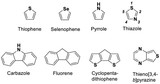
Fine chemicals and synthesis building blocks are a chemically-diverse
collection of reagents, monomers, and heterocycles
used in research and development today. Compounds we provide include alkanes to aldehydes, ketones to
benzophenones, nitrogen, oxygen, sulfur and mixed heterocycle ring systems, over 3,000
benzene derivatives and di-substituted and tri-substituted synthesis heterocycles, and
special compound collections used in organic synthesis. We specialize in transition met
…
26th Aug 2022

What are Biochemicals?
Biochemical compounds make up the cells and other structures of organisms and carry out life processes. Most biochemical compounds are very large molecules called polymers, built of repeating units of smaller compounds called monomers. There are millions of different biochemical compounds but they all contain carbon, hydrogen, and oxygen. Most can be classified under four major classes: carbohydrates, lipids, proteins, and nucleic acids. We offer various biochemicals from adenine, cytosine
…
26th Aug 2022
Salts and Inorganic Compounds
Metal salts and inorganic compounds include pure elements and
solid metals in laboratory and commercial grades. We carry more than 1800 inorganic
chemical and elemental products.From Aluminum to Zirconium salts, we have every elemental salt covered, and pure elements too. To find the product you are looking for search above or Ask A Chemist
Aluminum
Beryllium
Calcium
Copper
Gadolinium
Iodine
Ammonium
Bismuth
Cerium
…
19th Aug 2022